


This is the fourth and final installment in my Aldebaran series. You do not have to have read the rest to read this one but I link to each part of the series at the end in case you want to revisit it. I’ve also got a poll at the bottom if you want to weigh in on which fixed star and plant I write about next.
my books are open for august
Also! My books are open for August and have already starting to fill (partly because of my new reading EPIPHANY, all about your Jupiter placement).
If you’d like a fixed star reading or any other type, get on in there. Testimonials aplenty can be found here if you want to know what other people have said.
And don’t forget there’s always the Stellar Banner Report if you don’t feel like a whole ass reading but want to learn about two important stars in your chart via email.
when thistle talks to the bull
Milk thistle is armed to the teeth. It’s a spiked limb thrust out of the ground presenting, with sharp claws, a magenta pin cushion bloom. Down the stalk, you’ll find broad leaves marbled with cream, their borders jagged with needles, taking up so much space, claiming it. Cut milk thistle and its white blood seeps out. Wait until it goes to seed, becoming fluffy like a late dandelion head. If you wear thick gloves, you can hold the stock and pick the fruits out with great care and patience. It will take a long time. Decide for yourself if it is worth the effort.
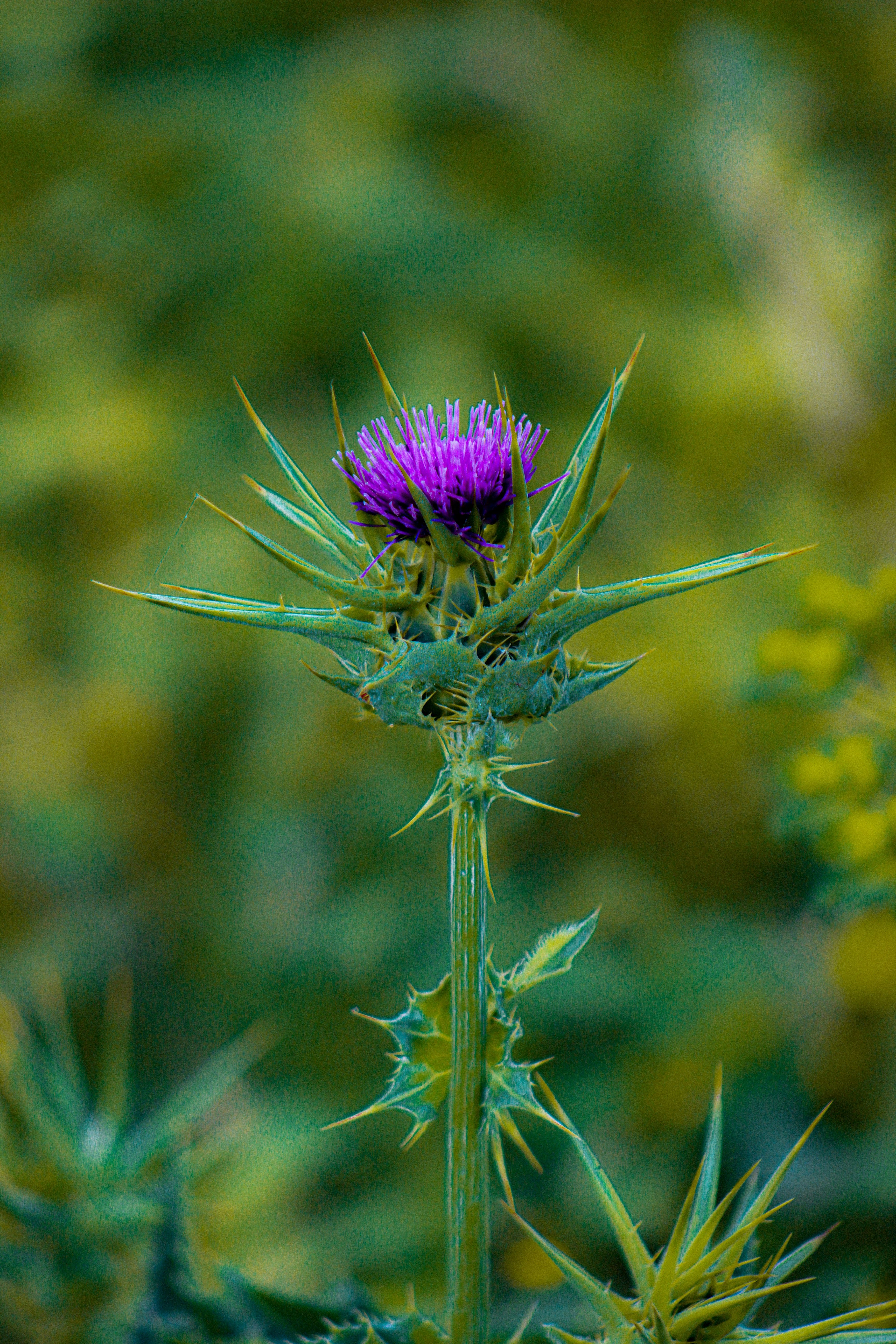
Milk thistle’s star is in the eye of the bull in the heavens, and the bull is enormous. He is not one bull but many. The sky accrues stories, and even the ones I layer are limited: I am only taking from the ones I know. The bull is a wild bull, a god turned into a bull, a bull killed for a god, a bull who is a man sent by a god as punishment, and a bull who plows the field.
“The Bull will dower the countryside with honest farmers and will come as a source of toil into their peaceful lives; it will bestow, not gifts of glory, but the fruits of the earth. It bows its neck amid the stars and of itself demands a yoke for its shoulders. When it carries the sun’s orb on its horns, it bids battle with the soil begin and rouses the fallow land to its former cultivation, itself leading the work, for it neither pauses in the furrows nor relaxes its breast in the dust. The sign of the Bull has produced a Serranus and a Curius, has carried the rods of office through the fields, and has left its plough to become a dictator. Its sons have the love of unsung excellence: their hearts and bodies derive strength from a massiveness that is slow to move, whilst in their faces dwells the boy-god Love [Cupido].” — Marcus Manilius, Astronomica, early 1st century
The bull constellation and its bright red eye, Aldebaran, work hard and pull fruitfulness from that work. Manilius’s writing on the bull reminds me of the passage from Genesis I pulled for another part of this series:
“Cursed is the ground because of you; in pain you shall eat of it all the days of your life; thorns and thistles it shall bring forth for you; and you shall eat the plants of the field. By the sweat of your face you shall eat bread, till you return to the ground, for out of it you were taken.” — Genesis 3:17-19
Thistle, a plant sent as a curse to humanity, a plant meant to make receiving nourishment that much harder. You will have to sweat for your supper. To this, Aldebaran shrugs. Aldebaran wants to do things, demands a yoke, as Manilius says. Make it harder. See if I care. I can take it. Aldebaran people will do battle, they will push, they will not relax, they will not waver, even if it takes time, even if they are slow to move. All the while Eros lives in their faces, a youthful wanting.
